


The only reliable way to find out which foods affect your mood is to log both, consistently, over enough time to spot repeats. There’s no shortcut or generic list that applies to everyone. The same meal that leaves one person foggy might do nothing to someone else. Your own data, tracked over a few weeks, is the only dataset that answers the question for you.
The process is simple in theory: write down what you eat, write down how you feel afterward, and look for what keeps showing up together. In practice, most people give up because doing this by hand (two separate notes apps, no timestamps, no easy way to compare) takes more effort than most days allow. The method works; the tooling is usually what fails.
Step-by-step: how to track foods that affect your mood
- Log every meal, even small ones. Snacks and drinks count. A pattern can hide in something you weren’t thinking of as a “meal.”
- Note your mood at intervals through the day. Energy and mood shift across a day, so capturing a few points (morning, mid-afternoon, evening) gives you more to work with than a single end-of-day rating.
- Timestamp everything. A crash two hours after eating is a very different signal from a crash right before bed. Without timing, you can’t connect cause and effect.
- Track for at least two to three weeks. A single bad day after a particular meal could be coincidence. Repetition across multiple occasions is what makes a pattern worth trusting.
- Look at what repeats. Scan your log for meals that show up more than once before a low-energy or low-mood stretch. That’s the signal.
- Keep other factors in view too. Sleep, water, activity, and routine are the wider set of inputs worth tracking alongside food, and isolating food alone can miss the fuller picture.
Why this is hard to do manually
Cross-referencing two separate logs by hand is tedious enough that most people stop after a few days. And even when the data exists, spotting a pattern across two or three weeks of entries by eye is genuinely difficult. Humans aren’t great at holding that much timestamped detail in mind at once.
How to do this with Lopie
Lopie was built for this. Log meals by voice, photo, or text, whichever is fastest in the moment, and log your mood the same way, right alongside it on one timeline. No switching apps, no separate notes.
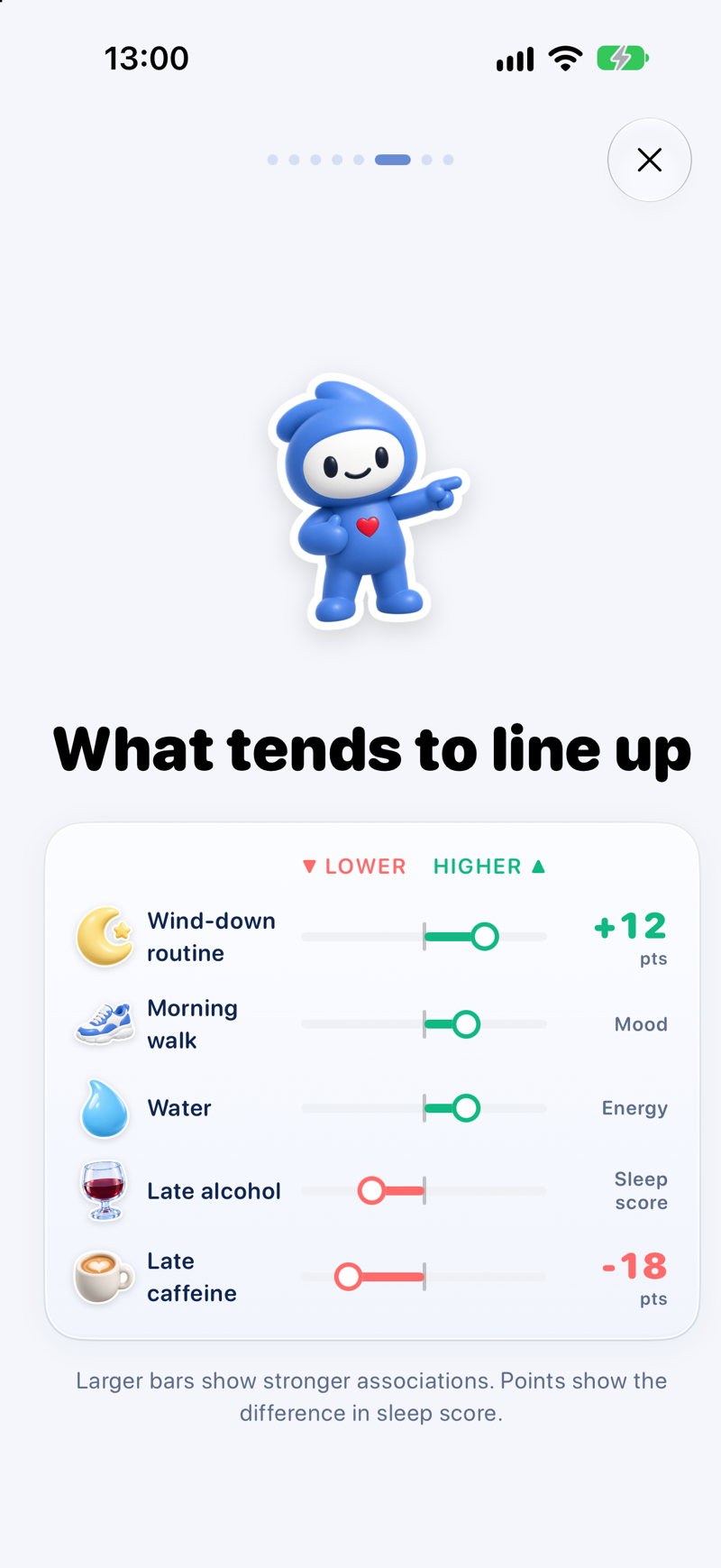
Once you’ve got a few weeks of entries, Lopie’s AI pattern spotting does the cross-referencing for you. It looks across your timeline and surfaces possible connections: what tends to line up with your better days, and what tends to show up before the rougher ones. It’s framed as a possible pattern to watch, never as a certainty.
Stop guessing which foods affect your mood. Let Lopie find the pattern in your own data.
Download Lopie for iPhone (free)Your weekly recap turns this into something you’ll want to look at: a short “movie” covering your wins, a pattern worth watching, and a simple plan for the week ahead. Lopie also folds in Apple Health data like sleep and steps, and can bring in weather, UV, and pollen. Mood rarely comes down to food alone, and a fuller picture makes the pattern more trustworthy.
Everything logs in seconds, stays private, and is never used to target ads.
Lopie is free to download, with a 7-day free trial of Lopie+ (then $69.99/year or $2.99/week), which includes the full pattern spotting and recap features.